Construction timelapse videos help AEC professionals summarise key events during the project and condense a passage of time into a short, compelling format. Time lapse videos make for great communications and marketing material to inform stakeholders, the public and potential clients.
Over the years, timelapse videos have become increasingly popular, and we often get enquiries about the cost of construction timelapse services in Australia. Australia’s construction industry is valued at A$180.78 billion in 2025 and projected to reach A$256.14 billion by 2030, and with that growth, every major build needs documentation.
Let us learn about the various factors that contribute to the cost and how they can enhance and communicate your construction project.
Table of Contents
Pricing packages to suit your business
Plans with inclusions for Drone Inspection, Land Surveying, 3D Laser Scanning, Drone Photography & Videography. Get a custom quote for your specific requirement.
Timelapse videos summarise key events over a period of time using either a fixed or aerial drone camera (yes, we can do a time-lapse with drones). In construction projects, a time-lapse video can be captured over a period of a few minutes, hours, days or months.
How do drones help with construction timelapse videos
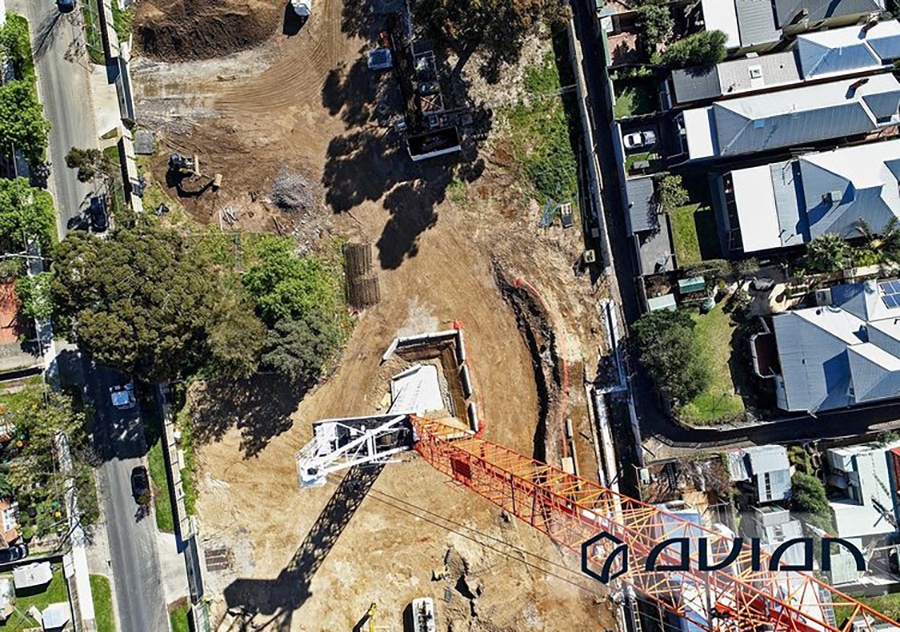
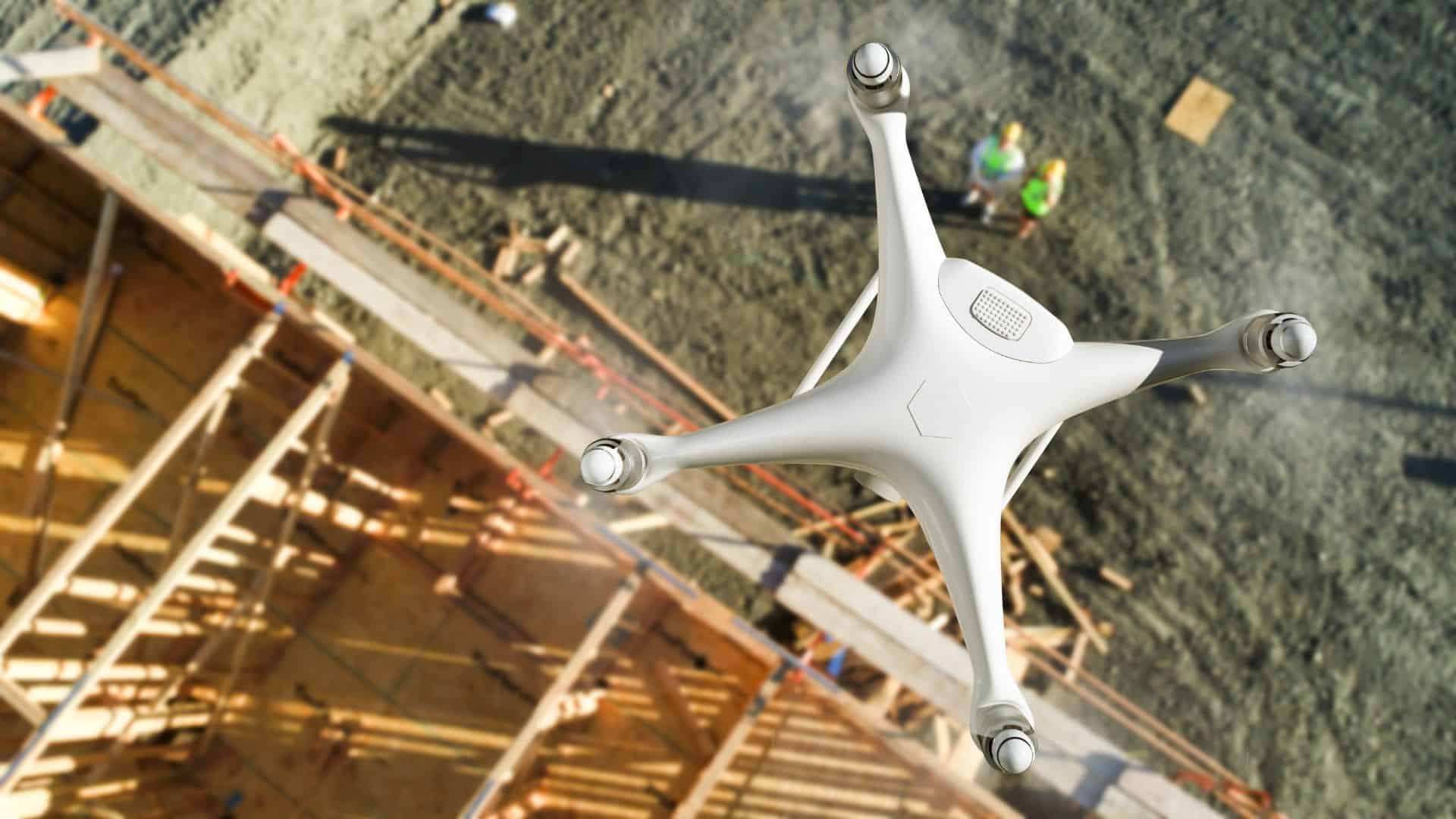
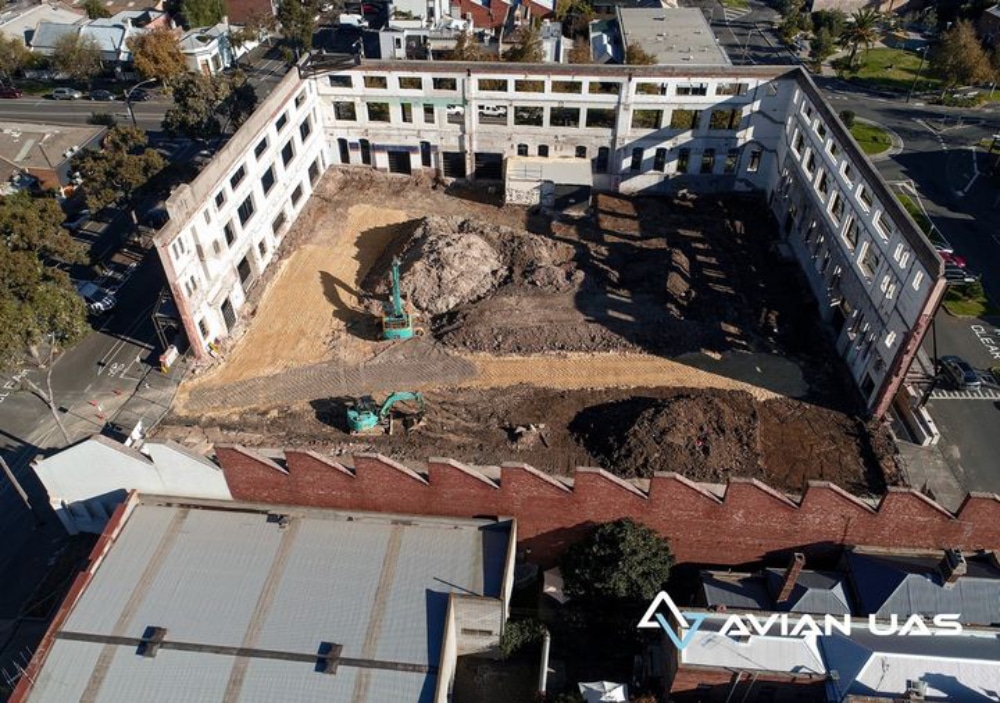
Drones have become an important part of marketing and communications. In construction timelapses, drones help capture an aerial perspective of the event or activity, which can be sped up to appear to be completed before your eyes.
For timelapse videos, video professionals help to position the camera exactly where you want to see the best angle or perspective to get the best possible footage that successfully captures the lifetime of the monitored site. These time lapse videos can be used as crucial marketing or communication material to engage the audience and stand out from the rest of the online social media videos.
To be effective at capturing the sequence of time, there are a few considerations aside from just pressing a button to record the scene and making it play at a faster speed.
Factors that affect construction timelapse videos
Producing and shooting a timelapse video needs a lot of planning. Here are some factors that we look into when deciding the budget for timelapse videos.
1. Project duration
The longer the timelapse video, the more it will cost. This is because timelapse videos need to be captured at regular intervals, so the camera must be powered for a longer period of time. Unlike other shorter videos, timelapse videos are captured over a period of time but sped up to make the on-site activities appear to happen in a few seconds.
For long-term outdoor projects, managed services now include remote monitoring of camera systems to immediately address when a camera drops offline or storage approaches capacity. This is now the professional standard for any deployment running longer than a few weeks, and is worth factoring into your budget planning.
2. Equipment and resources
Indoor and outdoor timelapse videos need different kinds of shooting equipment, power supply and mounting hardware. You need to identify the initial set-up costs such as cameras, tripods, crane arms and mounting hardware.
The professional standard in Australia has moved on considerably since our last update. Current professional deployments use 4K DSLR cameras with weatherproof housing, solar panels and integrated 4G modems, running continuously and uploading images to a secure cloud platform, giving project managers and stakeholders 24/7 remote access to progress imagery from any device. This cloud-connected approach has effectively replaced the older model of collecting camera data at the end of a project, and is now expected on any long-term professional deployment.
Depending on how long the cameras need to record, positioning, power supply, connectivity and security all affect the cost; particularly for remote or complex sites.
3. Deliverables needed
Timelapse videos usually need a bit of editing and modification. The photos or videos recorded need to be compiled and edited into a final video. This usually involves adding the timelapse to an existing edit or production.
Beyond the final video, deliverables from a modern timelapse deployment increasingly include a full photo archive, milestone stills for stakeholder reports, and ongoing access to the cloud portal during the project. These are now standard components of a professional managed service, not optional extras.
Stages in the construction timelapse video
Shooting a construction timelapse video is quite easy, provided you have clarity on what you want and the experience to correctly set the camera equipment. Often, timelapses appear to stutter and jump when played back, this is due to incorrect camera settings at the time of capture. There are roughly three stages to a construction timelapse video production.
1. Pre-production
In this stage we survey the site, understand your project requirements and identify the strategic locations where the cameras can be placed to capture the activity. For long-term outdoor projects, this also includes planning power supply, 4G connectivity and weatherproofing appropriate to the site conditions.
2. The setup and shooting stage
This is where the cameras have been installed and set up, then we wait for the activity to commence. The duration can vary from project to project. Usually the camera needs to be on for a couple of hours (sometimes even days) to detect any actual changes or transformations. Importantly, the frequency of image capture is essential to have sufficient video to work with.
For managed long-term deployments, this stage now includes ongoing remote monitoring. Authorised users can log in securely, view the latest images, move through the project history by date and time, and quickly retrieve visuals for meetings, reports or stakeholder updates, without requesting files manually every time they need an update.
3. Post-production stage
In this stage, we collect the camera data and edit it in video editing software. Most clients want us to edit the video as it saves them a lot of time and hassle and they can immediately use the video. Post-production can also include motion graphics, text overlays, branding and transitions to produce a polished marketing asset rather than raw footage.
Our Project Portfolio
A few of our past projects from our years of experience of working with 100+ clients in AEC Industry carrying out 3D Laser Scanning, modelling, volumetric calculations, aerial inspections, mapping & contour surveys, aerial land surveying, photomontage and much more.
Construction timelapse services can be customised to your project requirements. The duration, size and location all contribute to the cost of the timelapse video. Here are the three main types of construction timelapse services we offer:
A. Short-term timelapse videos
Short-term timelapse videos, as the name suggests, are quite easy and time-effective. It usually takes hours to complete the entire timelapse shoot. However, in some cases it might take 2–3 days depending on how large the construction activity.
In short-term timelapse videos, our camera operators use either photo and/or video capture to record the event timelapse. These cameras are set up in multiple positions to capture various angles of the activity. This type of timelapse suits construction events that occur over hours or days.
B. Long-term timelapse videos – Interior
Long-term timelapse videos are usually shot over a period of a few weeks to months. In these videos, the cameras track the gradual progress of the interior installations, refurbishments or fit-outs.
Indoor timelapse videos capture the interiors of the building or construction site. These videos are helpful for building renovation projects, restorations and installations.
Indoor timelapse videos require about 3–4 cameras placed at strategic locations inside the building. These cameras are fixed using clamps and must be stationary and not move. The gradual change happens because of the real-time progression of time and activities inside the building.
Indoor timelapse videos can cost a bit more than the standard short-term timelapses because they require more equipment, lighting and expertise.
Have a custom requirement ?
Get a quick estimate for your specific project requirements with listed inclusions/exclusions.
Outdoor long-term timelapse videos are usually used for tracking conditions over time, construction events or creating construction project updates.
The camera equipment must be protected from weather conditions and mounted at locations that allow for cameras to be securely installed for the duration of the event. This is to avoid the risk of any damage or movement to the cameras.
Outdoor construction timelapse requires dedicated timelapse camera equipment in weatherproof housing with independent power supply. The real cost of a construction timelapse is not the daily camera rate – it is the value of the footage you lose if the system fails. A construction project that runs for 12 months and invests $8,000 in a managed timelapse service is paying less than $700 per month for complete, guaranteed footage. Unmanaged consumer camera deployments carry a real risk of incomplete footage – especially for projects of six months or longer – which is why professionally managed outdoor systems with remote monitoring have become the recommended approach.
Hence, the price of outdoor construction timelapse videos is higher when compared to other timelapse videos, and the managed service component is worth accounting for in your budget from the outset.
Reasons why timelapse videos work
Timelapse videos are effective in crunching hours or days worth of real-time footage into a small and comprehensive video. And since the timelapse video is shot over a longer duration of time, AEC professionals can get a quick view of the activities or construction that has occurred on the project.
Timelapse videos are easily accessible, impressive and a great way to showcase the project and its overall success to stakeholders, the public, potential investors and clients. The numbers back this up: according to Wyzowl’s State of Video Marketing 2026 survey, 91% of businesses use video as a marketing tool, and 85% of consumers say a brand video convinced them to buy.
This is particularly relevant for the construction and property development sector. According to a Deloitte and Autodesk 2025 report on digital adoption in construction, Australian development companies now run an average of 6.9 digital technologies on site – up 38% year on year. Timelapse sits naturally alongside drones, BIM and IoT sensors as part of the modern digital site stack, and as projects grow in value and complexity, demand for objective visual documentation continues to grow.
Infrastructure Australia’s 2025 Market Capacity Report puts the five-year major public infrastructure pipeline at $242 billion, the highest in five years of tracking. Major projects like Metronet in Perth, Sydney Metro and Brisbane’s 2032 Olympic venues all require long-term visual documentation, and timelapse photography is a core part of how that documentation is delivered.
When combined with regular construction updates, photography and videos, timelapse videos become an effective marketing and communications strategy to engage your intended audience, inform the community or business, and serve as an investment tool to attract clients to invest in your projects in the future.
What do we offer?
At Avian, we have a team of experienced camera and drone operators who have ample experience working in the AEC industry. We offer niche, creative photo and video solutions that are customised to your unique project requirements, having worked extensively in civil, commercial and infrastructure construction projects.
So, how do you find out what you need? All you have to do is send us your details or drop us an email and we will get back to you to work out the best options.
At Avian, we offer clients an initial discussion where we discuss your project, needs and desired outcomes. This consultation call allows us to understand your project requirements and the deliverables you expect.
After the consultation call, we will consider the project and conduct some initial planning and issue you with a proposal or quotation.
If required, we may conduct a site visit or inspection to determine the best methodology, equipment and budget for your project.
Contact us to set up a brief call and discuss your project requirements and we can showcase your project events and activity in the best possible way.
Have a question for us ?
Our team is eagerly waiting to hear about your queries. Please call us at the number below during business hours and our team will help you out.