Knowing how to choose a BIM service provider is critical to the success of any design, construction, or asset management project. The right provider will improve coordination, reduce rework, and deliver accurate, future-ready digital assets. The wrong one can introduce delays, data gaps, and costly downstream issues.
If you’re evaluating vendors and trying to choose a BIM service provider with confidence, the following 10 criteria will help you compare capabilities, validate claims, and identify partners who can deliver reliable, high-quality BIM outcomes aligned with your project requirements.
1. Industry Experience and Project Portfolio
When learning how to choose a BIM service provider, experience is one of the strongest indicators of delivery quality.
What to evaluate:
- BIM-specific experience: Look for 5+ years delivering BIM (not CAD services that recently “added BIM”).
- Proven delivery volume: A strong provider will have dozens of completed BIM projects.
- Sector relevance: Commercial, residential, infrastructure, industrial, healthcare, or heritage experience aligned with your project.
- Scale familiarity: Providers should demonstrate experience with projects of similar size and complexity.
- Local knowledge: Familiarity with Australian standards, NCC requirements, and authority workflows.
Common red flags include vague portfolios, a lack of recent examples, or an inability to demonstrate BIM outcomes beyond visual models.



2. Software Expertise and Current Proficiency
A key step in how to choose a BIM service provider is ensuring they operate on modern, industry-standard platforms.
What to evaluate:
- Proficiency in Revit and Navisworks Manage
- Capability in Civil 3D for infrastructure projects
- Ability to deliver models compatible with client workflows
- Experience with clash detection, coordination, and model optimisation
Providers working with outdated software or limited platforms often create compatibility issues and workflow friction later in the project lifecycle.
3. LOD Capability and BIM Standards
Understanding how a provider manages Level of Development (LOD) is essential when you choose a BIM service provider.
What to evaluate:
- Demonstrated experience across LOD 300-500
- Clear definitions of what each LOD includes
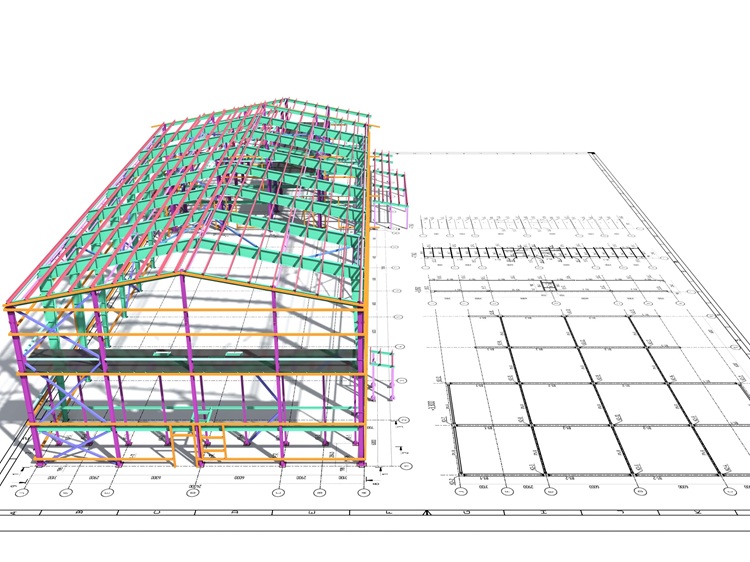
- Examples of high-detail models suitable for construction and as-built documentation
- Alignment with recognised industry standards
Avoid providers that use vague or inconsistent LOD terminology or overpromise LOD 500 without verified as-built data.
4. Reality Capture & Scan-to-BIM Capability
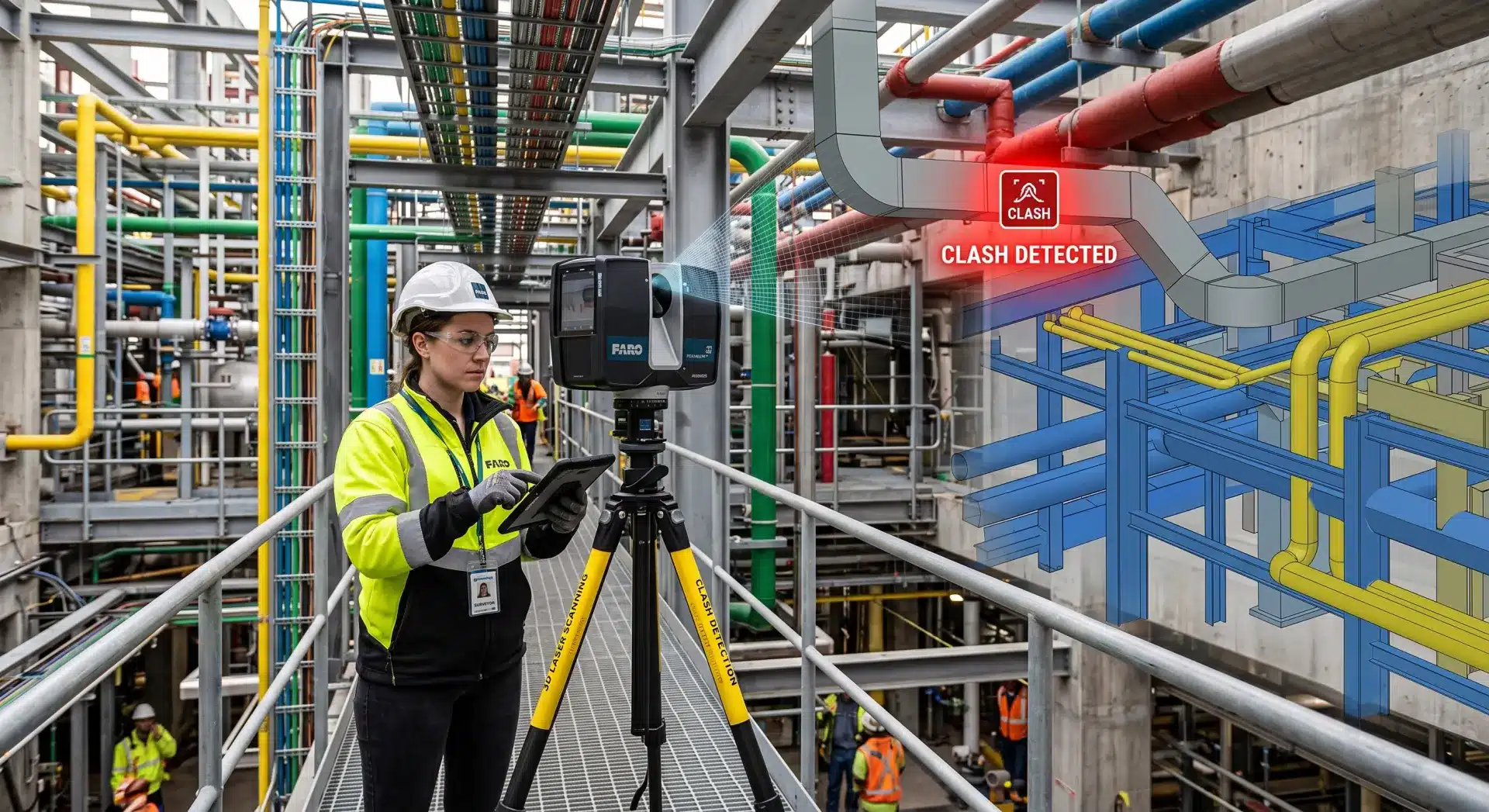
Reality capture is one of the most important differentiators when deciding how to choose a BIM service provider.
What to evaluate:
- In-house 3D laser scanning capability (not outsourced)
- Proven scan-to-BIM workflows
- Accuracy benchmarks in the ±2-5mm range
- Experience converting point clouds into reliable BIM models
Providers that integrate 3D laser scanning for architecture, engineering, and construction can deliver significantly higher accuracy, faster turnaround, and greater accountability than those relying on third-party capture.
Avian delivers fully integrated scan-to-BIM services using in-house 3D laser scanning and experienced modelling teams – eliminating coordination delays and ensuring a single point of responsibility from capture through to model delivery.
5. BIM Coordination & Clash Detection Expertise
If your project involves multiple disciplines, BIM coordination capability is non-negotiable.
What to evaluate:
- Experience coordinating architectural, structural, mechanical, electrical, hydraulic, and fire services
- Structured clash detection workflows
- Clear processes for clash tracking and resolution
- Ability to facilitate coordination meetings where required
Strong BIM coordination reduces site conflicts, RFIs, and construction delays.
6. Turnaround Time & Schedule Reliability
When you choose a BIM service provider, timelines matter just as much as model quality.
What to evaluate:
- Realistic, scope-based delivery programs
- Milestone-based submissions
- Proven on-time delivery track record
- Clear processes for expedited work if required
Unrealistic promises are often a sign of inexperience or offshore outsourcing.
7. Quality Control & Accuracy Verification
Reliable BIM outcomes depend on robust QA/QC processes.
What to evaluate:
- Documented quality assurance procedures
- Multi-stage model review
- Accuracy verification for scan-to-BIM projects
- Clear revision and issue-resolution policies
Accuracy verification is especially critical for projects informed by 3D laser scanning and existing conditions modelling.
8. Deliverables & Interoperability
A good BIM provider delivers models that integrate seamlessly into downstream workflows.
What to evaluate:
- Editable native model files
- IFC export capability
- 2D drawings derived directly from the model
- Access to point cloud data where applicable
- Compatibility with analysis and asset management platforms
This is particularly important when BIM data will be reused beyond design and construction.
9. Communication & Project Management
Clear communication is a defining factor in how to choose a BIM service provider.
What to evaluate:
- Dedicated project manager
- Regular progress reporting
- Responsive communication
- Familiarity with collaborative platforms
A technically strong provider with poor communication can still create project risk.
10. Local Presence & Geographic Coverage
Australian projects benefit from local expertise.
What to evaluate:
- Physical presence in Australia
- Knowledge of NCC and local authority requirements
- Ability to attend site visits or coordination meetings
- Experience working across multiple states
Providers offering drone survey services and on-site capture add further value through accurate, location-specific data collection.
Additional Red Flags to Avoid
- Pricing significantly below market norms
- Lack of references or verifiable project examples
- Vague scopes without LOD or deliverable clarity
- No professional indemnity insurance
- Heavy reliance on outsourced core services
Evaluate Avian Against These Criteria
If you’re assessing how to choose a BIM service provider in Australia, Avian meets these criteria through:
- Extensive BIM and scan-to-BIM experience
- In-house 3D laser scanning and reality capture
- LOD 300-500 modelling capability
- Strong coordination and QA/QC processes
- National coverage with local expertise
Avian supports projects across architecture, engineering, construction, and infrastructure with reliable BIM data that drives confident decision-making from concept through to asset handover.
Contact Avian
Call 1300 081 115 to discuss your BIM, scan-to-BIM, or reality capture requirements.