Renovating an airport terminal is rarely a straightforward task. Between constant passenger traffic, security restrictions, and tight schedules, every phase must be meticulously planned. Project managers, surveyors, and contractors face immense pressure to keep operations running while delivering renovations that meet strict safety and regulatory standards.
Balancing these demands, without causing flight disruptions or safety hazards, can feel like walking a tightrope. Traditional survey methods often fall short in these fast-paced, high-security environments, where every minute of downtime is critical.
This is where 3D laser scanning transforms the process. By capturing ultra-precise spatial data in record time, laser scanning provides teams with the detailed insights they need to plan, design, and execute renovation works efficiently and safely. In this article, we’ll explore how 3D laser scanning supports airport renovation – streamlining workflows, reducing risks, and delivering accurate, real-world data that keeps complex projects on track.
Table of Contents
Pricing packages to suit your business
Plans with inclusions for Drone Inspection, Land Surveying, 3D Laser Scanning, Drone Photography & Videography. Get custom quote for your specific requirement.
What Makes Airport Terminal Renovations So Complex?
Airport terminals are among the most challenging structures to renovate. These massive, continuously operating environments require a delicate balance between progress and passenger flow.
Unlike commercial buildings that can be temporarily vacated, airport terminals operate around the clock. This means contractors must work within extremely limited access windows, often overnight or during low-traffic periods. Any errors or delays can have ripple effects across flight schedules, security operations, and passenger experiences.
Some of the most common challenges include
Limited access for contractors – Work must fit within strict timeframes and restricted zones, leaving little room for error.
Unreliable or outdated building plans – Many airports were built or expanded decades ago, and original blueprints often don’t reflect the current as-built conditions.
Risk of rework and project delays – Without accurate measurements, even small discrepancies can lead to costly design revisions or construction setbacks.
Safety and compliance requirements – Every activity must meet aviation site safety standards and security protocols.
The result? Renovation teams need a solution that delivers fast, reliable, and non-intrusive data collection, precisely where 3D laser scanning excels.
How Does 3D Laser Scanning Simplify Surveying and Planning?
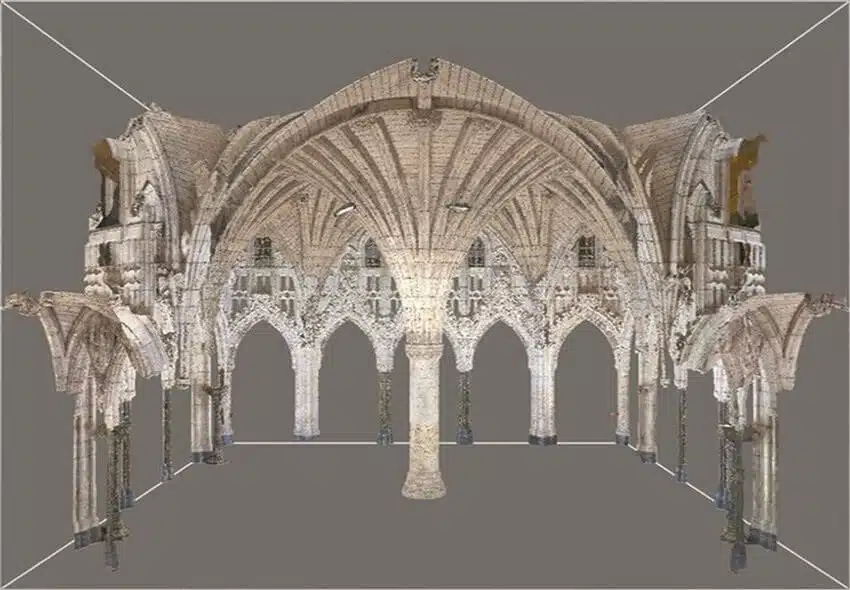
3D laser scanning uses advanced LiDAR (Light Detection and Ranging) technology to capture millions of measurement points per second, creating a precise digital replica, or “point cloud”, of the terminal’s existing conditions. This non-invasive process is ideal for active airport environments, as it requires minimal interference with day-to-day operations.
Once collected, this point cloud data forms the foundation for CAD Drafting & 3D Models, enabling teams to visualise and plan renovations virtually before any physical work begins.
Here’s how 3D scanning simplifies the surveying and planning phase
Captures millions of measurement points per second – Provides an incredibly detailed, millimetre-accurate record of existing structures.
Enables virtual design and clash detection: Architects and engineers can detect and resolve potential conflicts in design before construction starts.
Minimises site visits and manual measurements – Reduces time spent onsite, helping teams meet strict access and security requirements.
Facilitates seamless data sharing – Point clouds can be easily integrated into BIM platforms, improving collaboration between stakeholders.
By adopting laser scanning services, airport redevelopment teams can streamline workflows, reduce risks, and ensure that every design decision is based on accurate, real-world data.
Why Is Fast, Accurate Data So Important for Airport Renovations?
When working in live airport environments, speed and precision are essential. Inaccurate or incomplete data can lead to costly rework, extended closures, or even safety hazards.
3D laser scanning significantly enhances the efficiency of data collection, enabling surveyors to map complex terminal geometries in hours rather than days. The resulting point clouds are accurate to within millimetres, giving designers the confidence that every plan aligns perfectly with onsite conditions.
Here are a few ways improving airport design accuracy with scanning supports successful renovation outcomes
Reduces onsite time – Scans can be completed quickly, often outside of peak passenger hours, limiting disruption.
Lowers security risks – Fewer personnel and shorter survey durations mean reduced exposure in secure zones.
Eliminates repeat access – Once the site is scanned, teams can revisit the data anytime, avoiding multiple visits.
Supports continuous operations – Work can progress smoothly without interrupting terminal functions.
For project managers juggling strict budgets and tighter deadlines, this level of efficiency is invaluable.
What Benefits Does 3D Laser Scanning Deliver to Contractors and Surveyors?
3D laser scanning does more than capture physical dimensions; it creates a foundation for smarter, data-driven decision-making across all project phases. Contractors and surveyors benefit from a shared digital environment that enhances coordination and reduces uncertainty.
Key benefits of laser scanning in airport redevelopment include
Early identification of structural issues and hidden defects – Detects misalignments, cracks, or irregularities that traditional surveys might overlook.
Accurate as-built documentation – Ensures architects, engineers, and maintenance teams have reliable baseline data.
Creation of digital twins – Allows real-time simulation of design concepts and monitoring of renovation progress.
Quality assurance and compliance – Facilitates verification of subcontractor work and regulatory reporting.
Improved communication – Enables multiple stakeholders (architects, builders, and airport authorities) to collaborate from a single source of truth.
These advantages make 3D laser scanning an indispensable tool for teams working on time-sensitive, complex airport environments.
Integrating Laser Scanning with Broader Construction Technology
The real power of laser scanning comes to life when combined with other digital tools. When integrated into point cloud uses in infrastructure, teams can unlock deeper insights through BIM, clash detection, and simulation software.
Avian also offers drone surveying solutions, which provide aerial context and site-wide visualisation, ideal for large-scale airport precincts and external areas like runways, taxiways, and access roads. Together, terrestrial and aerial scanning provide a comprehensive, high-accuracy dataset that informs smarter design and planning decisions.
With this data, construction teams can manage remote project monitoring, track progress, and detect deviations early, all while keeping renovation activities aligned with operational priorities.
Comparing Modern and Traditional Methods
Traditional airport surveys often rely on manual tools, static measurements, and paper-based documentation. These methods are time-consuming, prone to human error, and difficult to scale in live operational environments.
Traditional surveys require multiple site visits, which increase costs and operational disruptions.
Laser scanning captures complete datasets in a single session, providing both accuracy and efficiency.
Traditional measurements depend on limited sample points, while scanning records the entire geometry, every beam, duct, and corridor.
Laser scanning data feeds directly into digital workflows, reducing miscommunication between design and construction teams.
In short, the shift toward digital documentation enables airports to renovate faster, safer, and with far greater confidence.
How 3D Laser Scanning Supports Aerospace Industry
By combining accuracy, speed, and minimal disruption, 3D laser scanning empowers airport authorities and project teams to plan renovations that enhance passenger experience and operational efficiency. It reduces uncertainty, supports compliance, and streamlines coordination between stakeholders.
Whether for terminal expansions, gate refurbishments, or baggage-handling upgrades, laser scanning provides the data foundation to make informed decisions.
Simply put, how 3D laser scanning supports airport renovation is through greater accuracy, reduced risk, and a more collaborative approach to design and construction.
How Avian’s Scanning Services Supports Aviation Industry
With years of experience in 3D data capture, Avian is a trusted partner for complex, high-security projects across Australia. Our specialists understand the unique demands of live aviation environments, where accuracy, discretion, and efficiency are paramount.
Here’s how Avian’s expertise adds value at every stage of your renovation project:
Proven experience in airport environments with restricted access and strict security compliance.
Nationwide coverage, high-accuracy scans, and rapid turnaround
Integration with design software compatible with Revit, CAD, and BIM platforms,
Tailored deliverables to suit specific client needs (2D drawings, 3D models, or interactive site maps).
From renovation project scanning applications to precision laser scanning for infrastructure projects, we help clients capture and manage built environments with complete confidence.
Improving airport design accuracy with scanning starts with Avian. Our multidisciplinary team supports a wide range of industries, helping clients bridge the gap between real-world conditions and digital precision.
Ready to Streamline Your Airport Renovation?
Renovating airport terminals doesn’t have to be a logistical nightmare. With Avian’s advanced 3D laser scanning and digital documentation expertise, your team can plan confidently, execute efficiently, and deliver projects that exceed expectations.
From improving design accuracy to reducing downtime, Avian helps transform complex airport renovations into streamlined, data-driven operations.
Talk to Avian’s expert team today and see the benefits of laser scanning in airport redevelopment. Reach out and learn how our services can support your next major redevelopment.
Have a custom requirement ?
Get a quick estimate for your specific project requirements with listed inclusions/exclusions.